
How VR Training Solutions Improve Workforce Performance
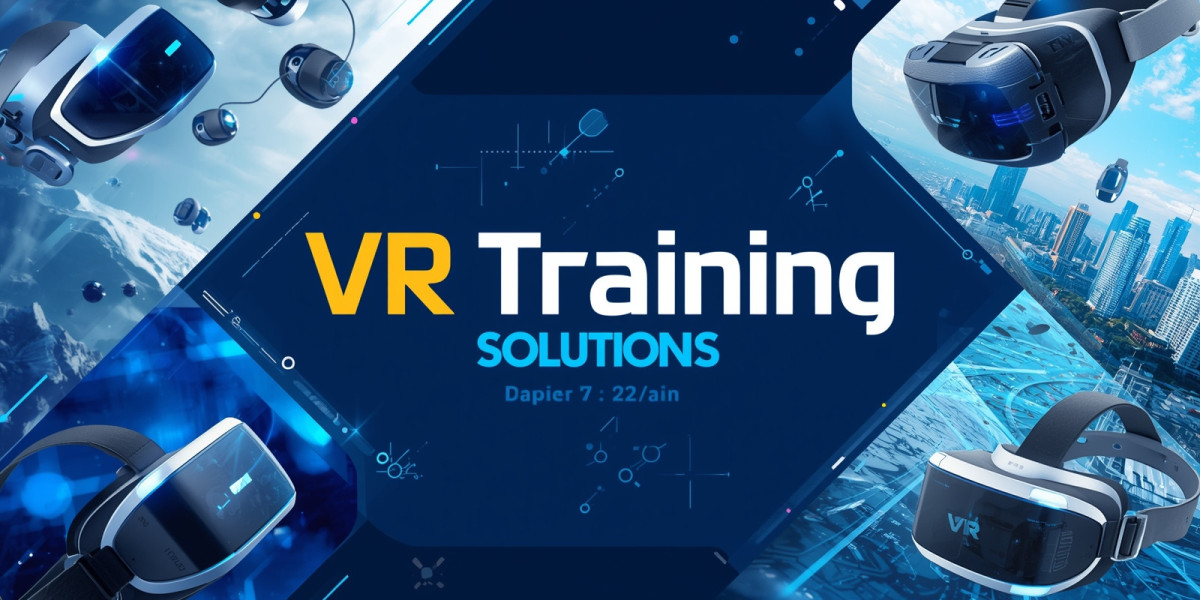
Virtual reality has changed the way organizations train their teams. Today, vr training solutions are helping companies create realistic, practical, and engaging learning environments. Instead of relying only on classroom sessions or printed manuals, businesses now use immersive simulations that allow employees to practice real world tasks in a safe digital space.
From manufacturing plants to healthcare facilities and corporate offices, vr training solutions are becoming a powerful tool for workforce development. They not only improve knowledge retention but also increase confidence, safety awareness, and productivity across different industries.
What Are VR Training Solutions
VR training solutions use virtual reality technology to simulate real life scenarios for training purposes. Employees wear a VR headset and interact with a computer generated environment that mirrors their actual workplace.
These solutions can include:
Equipment handling simulations
Safety drills and emergency response practice
Customer service role play scenarios
Technical skill development modules
Soft skill training such as leadership and communication
Because the environment feels realistic, employees learn by doing rather than just watching or reading.
How VR Training Solutions Improve Learning Retention
One of the biggest advantages of vr training solutions is improved knowledge retention. Studies show that people remember more when they actively participate in learning.
Traditional training methods often involve passive learning. Employees may attend lectures or watch videos, but they do not always get hands on experience. With vr training solutions, learners are placed inside realistic scenarios where they must make decisions and take actions.
This immersive approach:
Strengthens memory through experience
Encourages problem solving
Reduces distractions during training
Increases engagement and focus
As a result, employees are more likely to apply what they learned in real work situations.
Enhancing Safety Through Realistic Simulations
Workplace safety is a top priority in industries such as construction, oil and gas, healthcare, and manufacturing. VR training solutions allow companies to simulate dangerous scenarios without exposing employees to real risk.
For example, workers can practice handling hazardous materials or responding to emergencies in a controlled virtual environment. If mistakes happen, no one is harmed, and the learner can repeat the scenario until they master it.
Benefits include:
Reduced workplace accidents
Better understanding of safety protocols
Increased confidence in handling emergencies
Lower training related risks and costs
By using vr training solutions, organizations create a safer workforce while maintaining high training standards.
Improving Skill Development and Performance
Practical skills require practice. VR training solutions provide repeated, consistent, and measurable training experiences. Employees can perform tasks multiple times until they reach the desired level of competence.
This method is especially helpful for:
Technical machinery operation
Medical procedures
Equipment maintenance
Assembly line processes
Managers can also track performance data such as response time, accuracy, and decision making patterns. This data helps identify skill gaps and areas that require additional support.
When employees feel more skilled and prepared, overall workforce performance improves significantly.
Boosting Employee Confidence and Engagement
Confidence plays a major role in workplace productivity. When employees feel uncertain about their abilities, they may hesitate or make errors. VR training solutions give them the opportunity to practice in a realistic yet low pressure environment.
Because the training feels interactive and modern, employees often find it more engaging than traditional methods. Engagement leads to:
Higher motivation
Greater participation
Faster learning progress
Stronger team collaboration
By investing in vr training solutions, companies show that they value innovative learning, which can also improve employee satisfaction and retention.
Cost Efficiency and Long Term Benefits
Although implementing vr training solutions may require an initial investment, they often reduce long term training costs.
Organizations can save money by:
Reducing travel and accommodation expenses
Minimizing the need for physical training materials
Decreasing equipment damage during practice
Lowering accident related costs
Additionally, virtual modules can be reused and updated easily, making them a scalable solution for growing businesses.
Supporting Remote and Distributed Teams
In today’s global work environment, many companies operate across multiple locations. VR training solutions allow employees in different cities or countries to access the same standardized training program.
This ensures:
Consistent skill development
Uniform safety standards
Equal learning opportunities
Better collaboration across teams
With remote accessibility, organizations can maintain training quality regardless of location.
Final Thoughts
Workforce performance depends on effective training, safety awareness, and employee confidence. VR training solutions provide a modern and practical approach to achieving these goals. By combining immersive technology with real world scenarios, businesses can enhance learning retention, improve safety, and boost overall productivity.