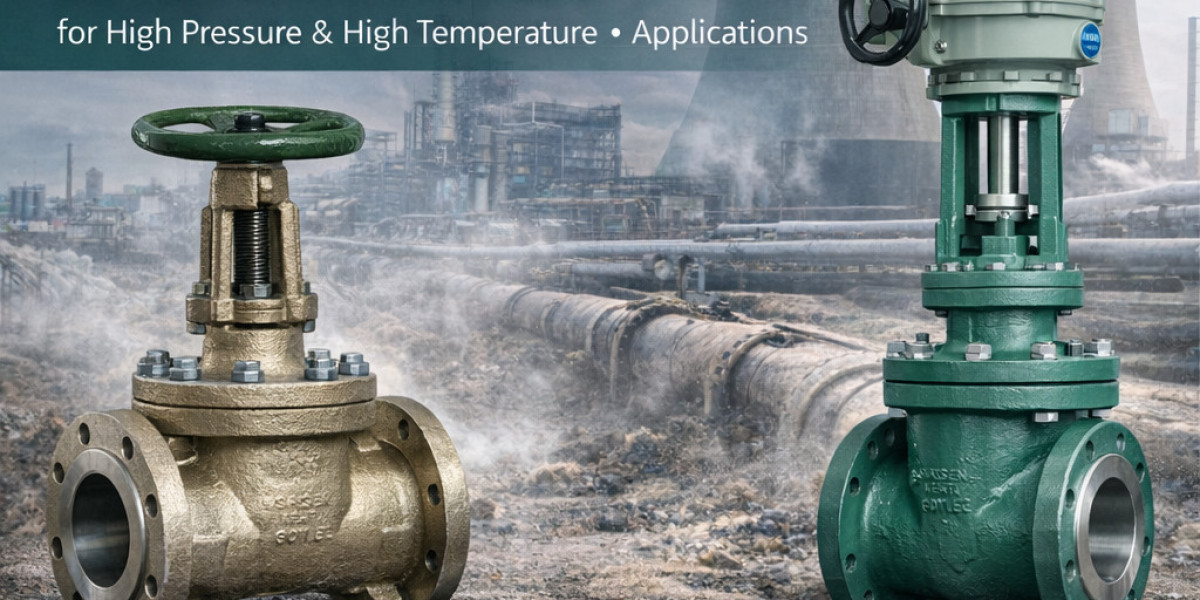

Power plants operate under extreme conditions involving high pressure, high temperature, continuous flow cycles, and strict safety requirements. In such environments, industrial valves play a critical role in controlling, isolating, and regulating the flow of steam, water, fuel, and other process media. One of the most important decisions in valve selection is choosing between manual valves and electric valves.
Both manual and electric valves are widely used in power plants, but their suitability depends on application requirements, automation level, budget, safety considerations, and long-term operational efficiency. This article provides a detailed comparison of manual vs electric valves for power plants, focusing on cost, control, reliability, and real-world applications.
Understanding Manual Valves in Power Plants
Manual valves are operated by hand using levers, handwheels, or gear mechanisms. These valves rely entirely on human intervention for opening, closing, or throttling.
Common Manual Valves Used in Power Plants
Gate valves for isolation services
Globe valves for flow regulation
Ball valves for quick shut-off
Butterfly valves for large-diameter pipelines
Key Advantages of Manual Valves
Manual valves are simple in design, making them highly robust and easy to maintain. Since they do not require electrical power or control systems, they are suitable for locations where automation is unnecessary or power availability is limited.
Manual valves are also cost-effective in terms of initial investment, which makes them attractive for small-scale or auxiliary systems in power plants.
Limitations of Manual Valves
Despite their simplicity, manual valves have several limitations. Operation speed depends on human effort, which can be slow during emergency situations. Manual valves cannot be remotely controlled, making them unsuitable for hazardous or inaccessible areas. They are also prone to operational inconsistency due to human error.
Understanding Electric Valves in Power Plants
Electric valves use electric actuators to control valve movement. These actuators receive signals from control systems, enabling precise and automated valve operation.
Common Electric Valve Applications
Boiler feed water systems
Steam distribution lines
Turbine inlet and outlet control
Cooling water circuits
Remote isolation in hazardous zones
Key Advantages of Electric Valves
Electric valves offer high accuracy, repeatability, and automation compatibility. They can be integrated with DCS and SCADA systems, enabling real-time monitoring and remote operation.
Electric valves significantly reduce human dependency and improve response time during normal operation and emergency shutdown scenarios.
Limitations of Electric Valves
Electric valves involve higher upfront costs and require a stable power supply. They also need skilled personnel for installation, calibration, and troubleshooting. In extremely harsh environments, actuator protection and proper enclosure ratings become critical.
Cost Comparison – Manual vs Electric Valves
Initial Cost
Manual valves are significantly cheaper than electric valves. The absence of actuators, control wiring, and automation infrastructure keeps procurement costs low.
Electric valves involve higher initial investment due to:
Electric actuators
Control panels
Cabling and integration
Commissioning requirements
Installation Cost
Manual valves have simple installation procedures with minimal accessories. Electric valves require electrical connections, signal testing, and control system integration, increasing installation costs.
Operating & Lifecycle Cost
While manual valves are cheaper initially, they may increase long-term operational costs due to manpower dependency and slower response times. Electric valves reduce labor costs and improve efficiency, often resulting in lower total lifecycle cost in large power plants.
Control & Automation Capabilities
Manual Valve Control
Manual valves offer basic on-off or throttling control. Flow accuracy depends on operator skill, making precise regulation difficult. These valves are unsuitable for applications requiring frequent adjustments or automated process control.
Electric Valve Control
Electric valves provide:
Precise positioning
Automated flow regulation
Remote operation
Alarm and feedback signals
They enable better process stability, energy efficiency, and safety compliance in modern power plants.
Reliability in Power Plant Environments
Manual Valve Reliability
Manual valves are mechanically reliable and less sensitive to electrical failures. They perform well in extreme temperatures and harsh conditions when properly designed and maintained.
However, reliability depends heavily on correct manual operation and routine inspection.
Electric Valve Reliability
Electric valves offer consistent and repeatable operation, reducing the risk of human error. With proper actuator selection, enclosure protection, and preventive maintenance, electric valves provide excellent reliability even in demanding power plant conditions.
Backup power systems further enhance reliability during power failures.
Safety Considerations
Safety is a top priority in power plants.
Manual valves may expose operators to hazardous environments such as high-temperature steam lines or high-pressure zones.
Electric valves improve safety by allowing remote operation, minimizing human exposure, and enabling automatic emergency shutdowns. This makes electric valves essential for critical and high-risk applications.
Maintenance Requirements
Manual Valves
Maintenance involves:
Periodic inspection
Lubrication
Packing replacement
Manual valves are easier to maintain and repair without specialized tools.
Electric Valves
Electric valves require:
Actuator calibration
Electrical testing
Control system diagnostics
Although maintenance is more technical, predictive maintenance strategies help reduce unexpected failures.
Application-Based Selection Guide
Where Manual Valves Are Preferred
Non-critical isolation points
Emergency backup systems
Low-frequency operation
Budget-sensitive installations
Where Electric Valves Are Essential
Boiler and turbine systems
Remote or hazardous locations
Automated process control
High-cycle operation
Safety-critical shutoff applications
Which Is Better for Power Plants?
There is no one-size-fits-all answer. Manual valves are ideal for simple, low-cost, and low-risk applications. Electric valves are the preferred choice for modern power plants that demand automation, precision, safety, and operational efficiency.
Most power plants use a combination of both manual and electric valves to optimize performance, cost, and reliability.
Conclusion
Choosing between manual and electric valves for power plants depends on operational requirements, automation level, safety needs, and budget considerations. Manual valves offer simplicity and low cost, while electric valves provide advanced control, reliability, and safety.
For long-term efficiency and compliance with modern power plant standards, electric valves are increasingly becoming the preferred solution for critical applications.