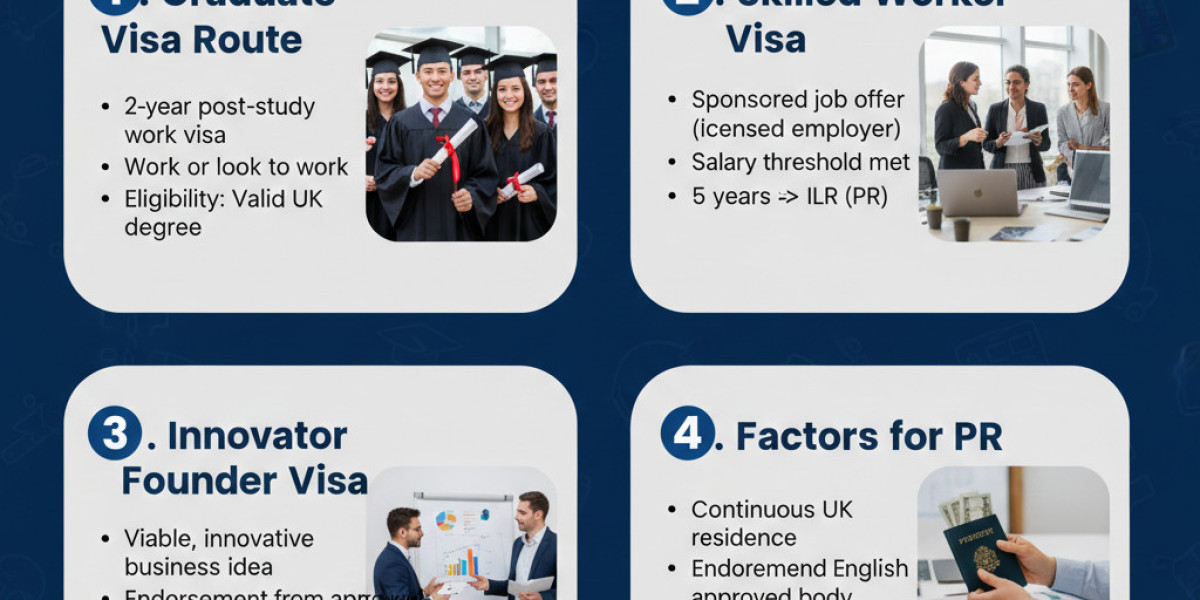

Hey, if you're an Indian student right now thinking about doing an MBA in the UK and already wondering about the long-term picture, whether you can stay on and eventually get permanent residency, you're asking a very smart, practical question. The UK doesn't hand out "PR" in the same straightforward points-based way Canada or Australia do, but it does have clear, step-by-step pathways that let you stay after graduation and build toward indefinite leave to remain (ILR), which is basically the UK's version of permanent residency.
For Indian students who study MBA in UK, the route is realistic but time-bound and depends entirely on getting the right kind of work experience after your degree. Here's how it actually works in 2026/27, based on the current rules.
The Starting Point: Graduate Route Visa (2 Years Post-Study Work)
Every international student who completes an eligible UK degree, including almost all full-time MBA programs, gets the Graduate Route visa automatically. This is a 2-year post-study work visa (3 years for PhD). You apply right after graduation, and it's one of the most straightforward visas in the UK.
Key points for MBA students:
No job offer or sponsor needed to get it.
You can work any job, any level full-time, part-time, self-employed, or even start your own business.
No minimum salary requirement.
You can switch to a Skilled Worker visa from inside the UK if you find a sponsored job.
Most Indian MBA students use these 2 years to gain UK work experience, build a network, attend industry events, and actively look for a sponsored role.
Step 1: Move to a Skilled Worker Visa (The Main Bridge to ILR)
The most common method to obtain permanent residency in the UK requires applicants to start with the Graduate Route before switching their status to the Skilled Worker visa. The UK permanent residency process identifies this visa as the primary work visa which enables applicants to obtain their indefinite leave to remain status.
How it works:
You need a job offer from a UK employer with a sponsor licence.
The job must be on the eligible occupations list and meet the skill level (RQF Level 3+).
The minimum salary requirement for this position is set at £38,700 per year which will become effective on 2026. The organization will pay the applicant either this minimum salary or the actual market rate for their particular job position.
Your employer handles the sponsorship certificate (CoS).
You apply from inside the UK before your Graduate Route expires.
Many Indian MBA students land roles in consulting (Big 4, boutique firms), banking/fintech, tech companies, supply chain/logistics, or management trainee programs, these are the most common paths to sponsorship.
Step 2: Build 5 Years on Skilled Worker Visa for ILR
The Skilled Worker visa permits you to work and live in the United Kingdom for five years which you can extend. Your five-year visa period starts when you receive this visa and ends when you complete the Graduate Route visa.
ILR requirements:
Pass the Life in the UK test
Maintain English language (already met via your degree/IELTS)
No criminal record
The continuous residence rules require you to spend most of your time in the UK.
You can request British citizenship after you complete six years of residency in most cases, which includes one year of holding ILR status.
Alternative Routes After MBA
Some students explore other paths:
The Innovator Founder visa permits business establishment which needs endorsement from an authorized organization.
The Global Talent visa provides access to exceptional individuals who excel in technical and digital domains yet it remains uncommon for recent MBA graduates.
High Potential Individual visa, if your MBA is from a top-50 global university (check current list; changes yearly).
The Skilled Worker to ILR pathway represents the most typical and feasible admission method forIndian MBA students.
Timeline for Indian Students
Typical path:
Year 1: Complete MBA (2026/27)
Years 2–3: Graduate Route visa (work flexibly, network, job hunt)
Years 4–8: Skilled Worker visa (sponsored job)
Year 9: Apply for ILR (permanent residency)
Year 10: Eligible for citizenship
Final Thoughts
You can obtain permanent residency in the United Kingdom after completing your Master of Business Administration degree through proper planning and through six to ten years of living and working in the country. The Graduate Route gives you the crucial 2-year window to find sponsored employment, and MBA programs from good universities (even mid-tier ones with strong placement records) give you a real edge in the job market.
Start by choosing an MBA program with solid employability support, placements, and industry links, those make the switch to Skilled Worker much easier.
If you're still deciding on universities, programs, or how to build a profile that leads to sponsorship, reach out to study in UK consultants for Indian students.Things move fast always check the latest UKVI rules directly. What's your current qualification, work experience, or target MBA specialisation?