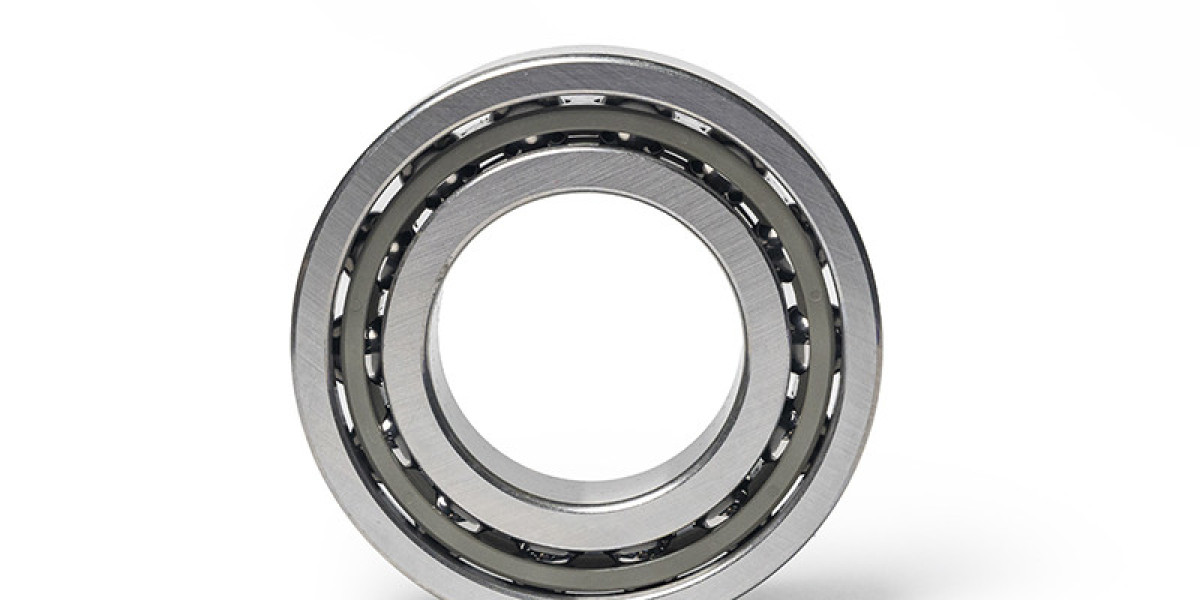
Angular Contact Ball Bearing for High-Speed CNC Stability
Modern CNC machines and high-speed spindles demand extreme precision. However, many manufacturers struggle with vibration, thermal expansion, and axial load imbalance. These issues reduce machining accuracy, shorten bearing life, and increase maintenance cost.
The 72 angular contact ball bearing is designed specifically to solve these problems. It provides higher axial load capacity, improved rigidity, and stable performance under high-speed conditions.
The Industry Problem: Accuracy Loss in High-Speed Systems
CNC spindles and precision motors operate at high RPM. At such speeds:
Axial forces increase significantly
Heat builds up rapidly
Small deflections reduce machining accuracy
Standard bearings lose preload
Deep groove ball bearings are not designed for high axial loads. When used in spindles, they create vibration and tool misalignment. This directly impacts surface finish and dimensional tolerance.
Manufacturers need a bearing solution that balances speed and stiffness without increasing system complexity.
What Is a 72 Series Angular Contact Ball Bearing?
The 72 series belongs to the angular contact bearing family. It features:
A specific contact angle optimized for axial load
Precision-machined raceways
High-quality steel for durability
Capability for paired mounting (DB, DF, DT arrangements)
Unlike conventional bearings, the 72 angular contact ball bearing can handle both radial and axial loads simultaneously. It is widely used in spindle systems and precision equipment.
How It Works
Angular contact bearings use an angled contact design between balls and raceways. This angle allows force transmission along the axis.
Contact Angle Advantage
The larger contact angle increases axial load capacity while maintaining smooth rotation.
Preload Capability
When mounted in pairs, preload improves stiffness and reduces internal clearance.
High-Speed Geometry
Optimized internal design minimizes friction and heat generation.
This combination ensures stable rotation even at high RPM.
Problems with Old Bearing Solutions
Traditional deep groove bearings or low-precision angular bearings cause:
Limited axial support
High temperature rise
Reduced service life
Increased vibration
They often require frequent replacement, which increases downtime and operational cost.
The 72 series solves these issues by offering better load distribution and improved heat control.
Key Features
High axial load capacity
Excellent rotational accuracy
Suitable for paired mounting
High-speed performance
Reduced vibration and noise
Long operational life
These features make it ideal for demanding industrial applications.
Comparison Table
| Feature | 72 Angular Contact | Deep Groove Bearing |
|---|---|---|
| Axial Load Capacity | High | Limited |
| Speed Performance | Excellent | Moderate |
| Rigidity | High | Medium |
| Precision Grade | Up to P4/P5 | Standard |
| Heat Resistance | Better | Lower |
This comparison clearly shows why spindle systems rely on angular contact designs.
Real Applications
The 72 series is widely used in:
CNC machine tool spindles
High-speed motors
Grinding machines
Precision pumps
Gearboxes
In these applications, consistent accuracy is critical for product quality.
Why Manufacturers Prefer It
OEM manufacturers choose 72 series bearings because they:
Improve machining accuracy
Extend maintenance intervals
Reduce total cost of ownership
Increase spindle stability
Support high production speeds
Reliable performance directly impacts machine reputation and customer satisfaction.
How to Choose the Right 72 Bearing
When selecting, consider:
Load Requirements
Calculate axial and radial load values.
Speed Rating
Match bearing limits with operating RPM.
Precision Grade
High-end machines require P4 or P5 grades.
Mounting Arrangement
Choose DB (back-to-back) or DF (face-to-face) depending on stiffness needs.
Lubrication
Proper grease or oil lubrication improves lifespan.
Selecting the right configuration ensures maximum efficiency and durability.
Conclusion
High-speed industrial systems demand stability, precision, and reliability. Standard bearings often fail to meet axial load and stiffness requirements. The 72 series angular contact design provides improved rigidity, heat control, and long-term durability.
For CNC builders and industrial manufacturers, choosing the right bearing is a performance decision. Stable rotation, higher accuracy, and reduced downtime begin with precision engineering.